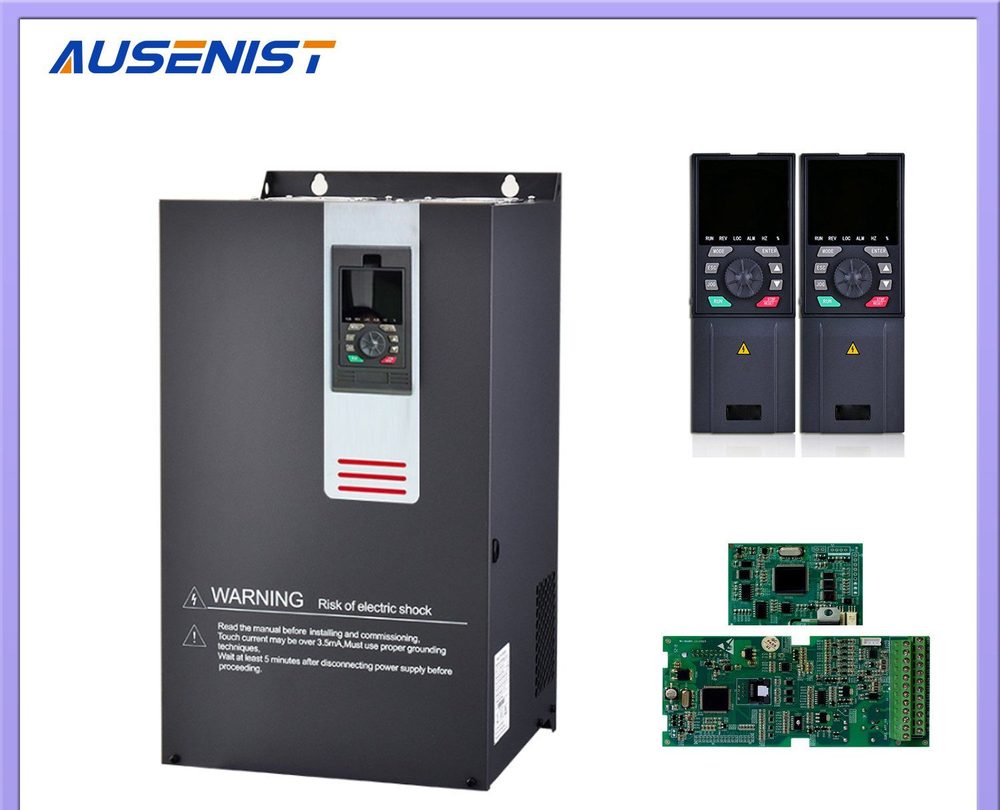
The inverter, the array and the pump
Each model's published panel window is part of its specification. The array and the pump with its site works sit outside the inverter listings; ask for the inverter and its array to be itemised in each offer.
The published panel-voltage windows
The YSG model table publishes a recommended panel-voltage window for every model — 120–450 V on the 0.75 kW model, 400–800 V on the 7.5 kW three-phase model, and so on across the range. The booster is the published detail that changes the array: selected YSG 0.75–2.2 kW models carry a built-in booster function, documented as letting the pump start with fewer panels. When comparing two small systems, ask for the booster configuration to be priced into the comparison.
How the YSG models differ
Within the YSG range — 0.75 kW to 200 kW — the models differ in rating and configuration, as the model table sets out. Hybrid AC/DC models switch automatically between solar and mains or generator power — the switching is documented behaviour of the range, and the hybrid configuration is a separate model choice in its table. Protection grade matters outdoors: IP65 is the published standard for the YSG range, with IP21 noted for some high-power YSG cabinet models. A 4G/WiFi remote monitoring module is documented as an option for sites that need supervision. And the protection set — lightning, dry-run, tank overflow — is part of the published specification, not an extra. The model table also publishes each model's weight and dimensions.
What the published specification already includes
The YSG documentation publishes its protection set as part of the specification: lightning protection, dry-run protection (by sensor or software detection), tank overflow protection, overvoltage, overload, short circuit and overtemperature. IP65 is the published YSG enclosure standard, with IP21 noted for some high-power YSG cabinet models. The model table's per-model fields — rated power, Vmp range, recommended panel voltage, pump voltage and frequency — are the array-design inputs, stated per model rather than per range.
The window classes in the table
The published YSG windows themselves fall into classes a buyer can read directly from the YSG table: 120–450 V on the small YSG booster models, 200–450 V and 200–500 V on the mid-range YSG single-phase-pump models, 300–700 V on the 2.2 kW YSG three-phase booster model, and 400–800 V on the larger YSG three-phase models. The table prints a hybrid AC power field for each model row, and the booster rows are the LB and GB models named in the worked comparison below. A site's array is matched against one of those printed windows.
MPPT efficiency, as published
The YSG documentation publishes MPPT tracking efficiency of 97–99% for the range. See the MPPT guide for the documented behaviour.
Getting a system quotation
- The pump: power, voltage (single/three-phase class), and whether it already exists.
- The duty: daily water volume, total head, and whether night running is required (the hybrid question).
- The site: existing panels, if any — their voltage and wattage — or a clean-sheet array design.
- Any monitoring requirement for an unmanned site — the documented 4G/WiFi module is an option line.
Ask for the inverter model and the recommended panel configuration for it to be covered in the quotation, so the array can be priced locally or with the same enquiry. Firm prices are per quotation; the product facts behind them are on the solar pump inverter page.
A worked comparison, without invented prices
Consider two quotations for the same 2.2 kW well pump, one of them built on the booster model in the same class — the published table shows the 2.2 kW booster model (HSPH220GB / YSG2200GB) working from a 300–700 V panel window with the booster built in — documented as starting the pump with fewer panels. Ask for the array configuration for each inverter to be itemised in both quotations.
What to ask a quotation to itemise
Ask for five lines: the inverter model with its published window and protection grade; the recommended array configuration (string voltage and wattage) for that model; the pump compatibility confirmation (voltage class and phase); the options priced in (hybrid switching, monitoring module) versus available; and the documentation set. Ask for those five lines in each offer.
Matching window to array
The model table publishes each model's window beside its rating, and the booster models are documented as starting the pump with fewer panels. The printed pairings are model, window and booster: state your array in the enquiry and ask for the model against it to be stated in the quotation.
Seasonality and storage
The hybrid models switch to the AC source automatically when sunlight is insufficient — the documentation's answer to overcast periods. State the duty across the year in the first enquiry, and ask for the configuration to be matched to it.
Frequently asked questions
Can I use my existing panels?
State the array's specification in the enquiry, for confirmation against the selected model's published window (for example the 120–450 V or 400–800 V classes in the YSG table).
Is hybrid worth it?
Where water is needed at night or through long overcast periods, the documentation's automatic AC/DC switching is the difference between a solar pump and a solar-assisted supply.
Send us your motor rating and application
Tell us the motor power, the supply voltage on site and what the drive will run — pump, fan, machine tool or lift. Minimum order is 1 piece on the main catalogue lines, as published on the platform store; ask for price and lead time for your model and quantity to be stated in the quotation. Email [email protected] or message us on WhatsApp.